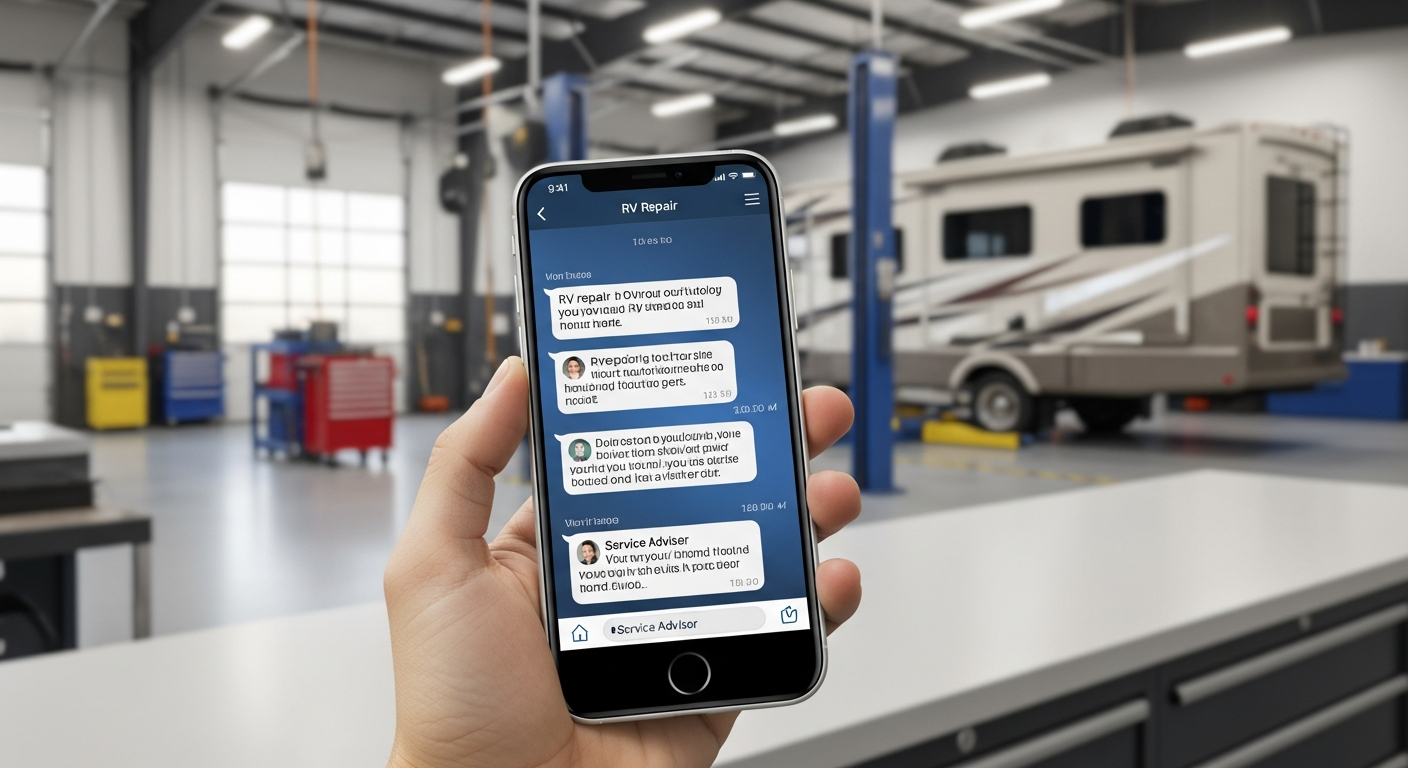
Communication Is the Whole Game
Here's something most RV shop owners learn the hard way: the quality of the repair is only half the customer's experience. The other half — sometimes the bigger half — is how you communicated throughout the process.
An RV owner who gets a perfect repair but hears nothing for 4 days will leave you a mediocre review. An RV owner who gets a good repair with proactive updates at every step will leave you a five-star review and tell their campground neighbors about you.
This isn't a theory. It's what we see consistently across shops that use SymFlow. The shops with the best reviews and highest repeat-customer rates aren't necessarily doing better mechanical work — they're communicating better.
The Communication Timeline
Great customer communication follows a predictable pattern. Here's the playbook, from first contact to post-service follow-up:
1. Booking Confirmation
The moment a customer books an appointment — whether by phone, online form, or walk-in — they should receive a confirmation. Text message. Email. Both.
The confirmation should include:
- Date and time of the appointment
- Your shop's address (or the service location for mobile jobs)
- What to expect ("Please have your RV accessible and unlocked")
- How to reach you if they need to reschedule
This takes 10 seconds if it's automated. It takes 5 minutes if someone on your team is typing it manually. And if nobody sends it at all, the customer is already wondering if you're organized enough to trust with their rig.
2. Day-Before Reminder
48 hours before the appointment, send a text reminder. Simple, short, and clear: "Reminder: Your RV service appointment is tomorrow at 9am. Reply to this text if you need to reschedule."
We've covered the math on missed appointments elsewhere, but the short version is: automated reminders cut no-shows by 30–50%. This single text message is worth thousands of dollars per year.
3. Intake Acknowledgment
When the customer drops off their RV (or when your mobile tech arrives at the job site), send a quick message: "We've received your [Year] [Make/Model] and the team is reviewing it. We'll update you as soon as we have a diagnosis."
This is the moment the customer starts to get anxious. Their home-on-wheels is in your hands. A quick acknowledgment — even before you've started work — tells them they're not forgotten.
4. Status Updates During the Repair
This is where most shops fall apart. The job is in progress. The customer hears nothing. After a day or two, they call: "Any update on my RV?"
Your front desk takes the call, walks to the bay, talks to the tech, walks back to the phone, relays the information. That's 5–10 minutes per call. Multiply by the number of customers who call for updates every day. It's an enormous time sink.
The fix: when the work order status changes, the customer gets an automatic text.
- "In Progress" → "Good news — a technician has started work on your RV."
- "Waiting on Parts" → "We're waiting on a part to arrive for your repair. Expected delivery: [date]. We'll update you as soon as it's here."
- "Additional Work Needed" → "During the inspection, we found [issue]. We'll send you an updated estimate for your approval before proceeding."
- "Complete" → "Your RV repair is complete! Here's your invoice and payment link: [link]"
Each of these messages eliminates a phone call. More importantly, they make the customer feel taken care of. They know what's happening without having to ask.
5. Completion Notification
When the job is done, don't just mark it complete in your system and wait for the customer to call. Send them a text immediately:
"Your RV is ready for pickup! Here's a summary of the work performed and your invoice: [link]. You can pay online or at pickup. Thank you for choosing [Shop Name]!"
Include the payment link in the notification. Customers who can pay from their phone before they even arrive will do it — and you get paid faster.
6. Follow-Up After Pickup
This is the step that 90% of shops skip entirely. And it's the step that drives the most repeat business and referrals.
Two to three days after the customer picks up their RV, send a follow-up:
"Hi [Name], thanks again for trusting [Shop Name] with your [RV]. If everything's working great, we'd really appreciate a quick review: [Google Review link]. If you're experiencing any issues, just reply to this text and we'll make it right."
This does three things:
- Generates reviews. Most customers don't leave reviews because nobody asks them. A direct text link to your Google Business profile makes it effortless.
- Catches problems early. If something isn't right, you want to hear about it directly — not through a one-star review. Offering to fix it via text shows you stand behind your work.
- Keeps you top-of-mind. The next time that customer needs RV service, they remember the shop that followed up. Not the one that ghosted them after payment.
Handling the "Is It Done Yet?" Calls
Even with automated updates, some customers will call. That's fine. But automated updates dramatically reduce the volume. Shops that implement status-change notifications typically see a 50–70% reduction in inbound status-check calls. That's hours of front desk time freed up every week.
For the customers who do call, the experience is better too. Your front desk can say, "Let me pull up your work order — it looks like it moved to 'waiting on parts' yesterday and the part is expected tomorrow." Instant answer, no bay walk, no tech interruption.
Building a Referral Engine
RV owners talk to each other. At campgrounds, at RV parks, in online forums, at rallies. One great experience with your shop gets shared organically in a way that doesn't happen as much in regular auto repair.
The communication playbook above isn't just about one customer's experience — it's about building a reputation that spreads. When an RV owner tells their campground neighbor, "I used this shop and they texted me updates the whole time, sent me a payment link when it was done, and followed up to make sure everything was working," that neighbor becomes your next customer.
You can amplify this by:
- Asking for referrals directly. In your follow-up message, add: "Know someone who needs RV service? We'd be honored by the referral."
- Making reviews easy. A direct link to your Google review page in the follow-up text. One tap. Most people will do it if you make it that simple.
- Sending seasonal reminders. A text in March to last year's customers: "Spring is here — time to get your RV ready for the road! Book your spring check at [link]." This is retention marketing, and it's incredibly effective.
Automate the Playbook
Everything described above can — and should — be automated. You should not be relying on your front desk to manually send texts at each stage. Humans forget. Systems don't.
SymFlow's customer communication tools automate this entire workflow. Booking confirmations, appointment reminders, status updates, completion notifications, and follow-up messages all fire automatically based on work order status changes and scheduling events. Your team doesn't have to think about it.
The result: happier customers, fewer phone calls, more five-star reviews, and a shop that feels professionally run — even if it's just you and two techs.
Start your free 30-day SymFlow trial and see how automated communication changes your customer relationships. No credit card required.